
Four synthesizers, each with its own sound
SynthB started as a synthesizer, and it is still the heart of the app. Version 2.0 added three more synth engines. Any of them can be a channel in the rack, as many times as you like.
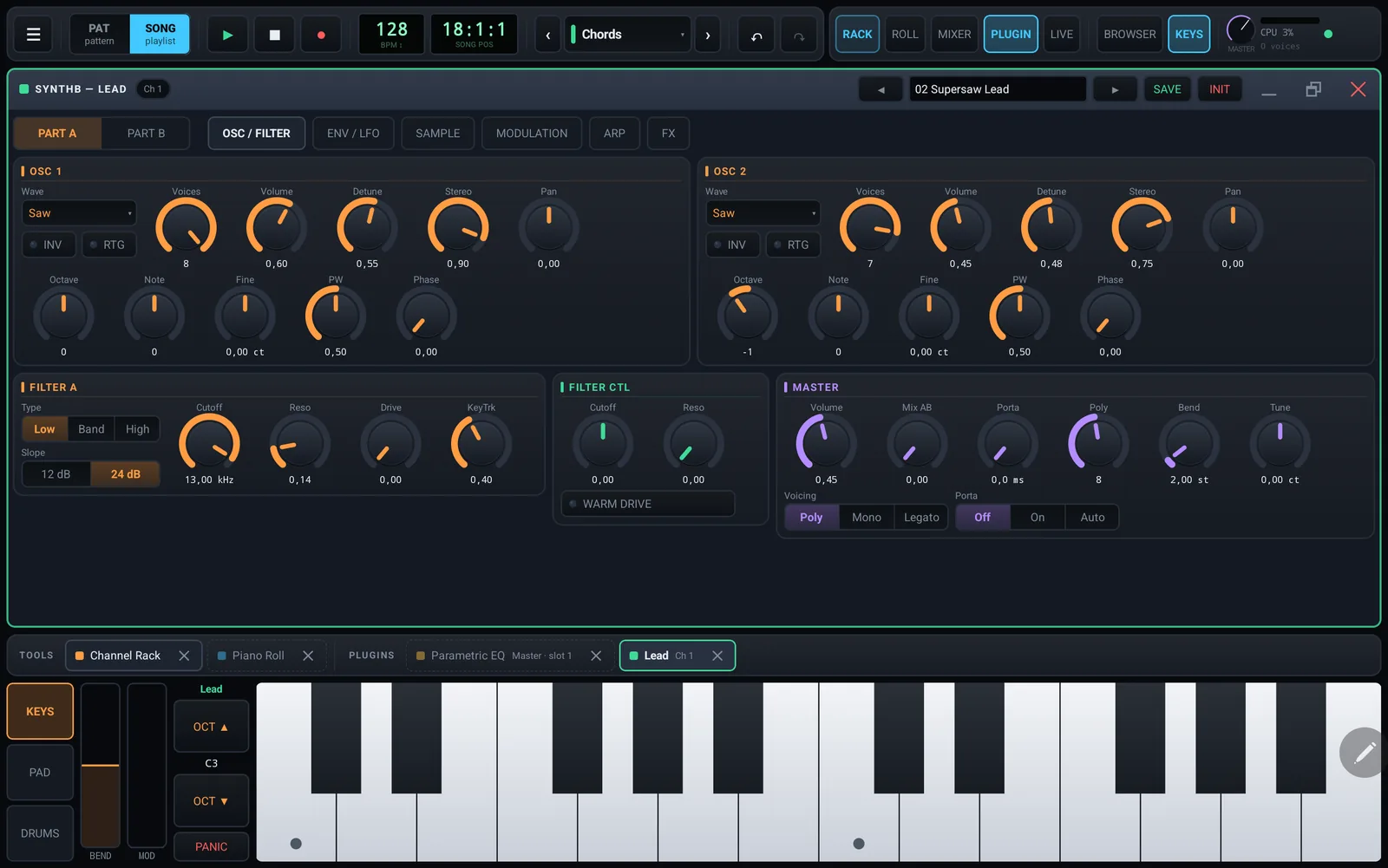
SynthB: the two-layer subtractive synth
Two complete layers, A and B, each with two oscillators, a filter, envelopes and LFOs, played together or split. It is built for big pads, supersaw leads and basses.
- Unison oscillators, up to eight voices each, band-limited so high notes do not alias.
- Four-pole ladder filter with low, band and high-pass outputs.
- Analog-style envelopes and seven LFO shapes, free or synced to tempo.
- A modulation matrix with 46 destinations, from velocity and mod wheel to almost anything.
- Sample and granular oscillators: put a recording in place of a waveform and it goes through the same filter and envelopes.
- Arpeggiator with nine modes and 16-step gate, transpose and velocity lanes.
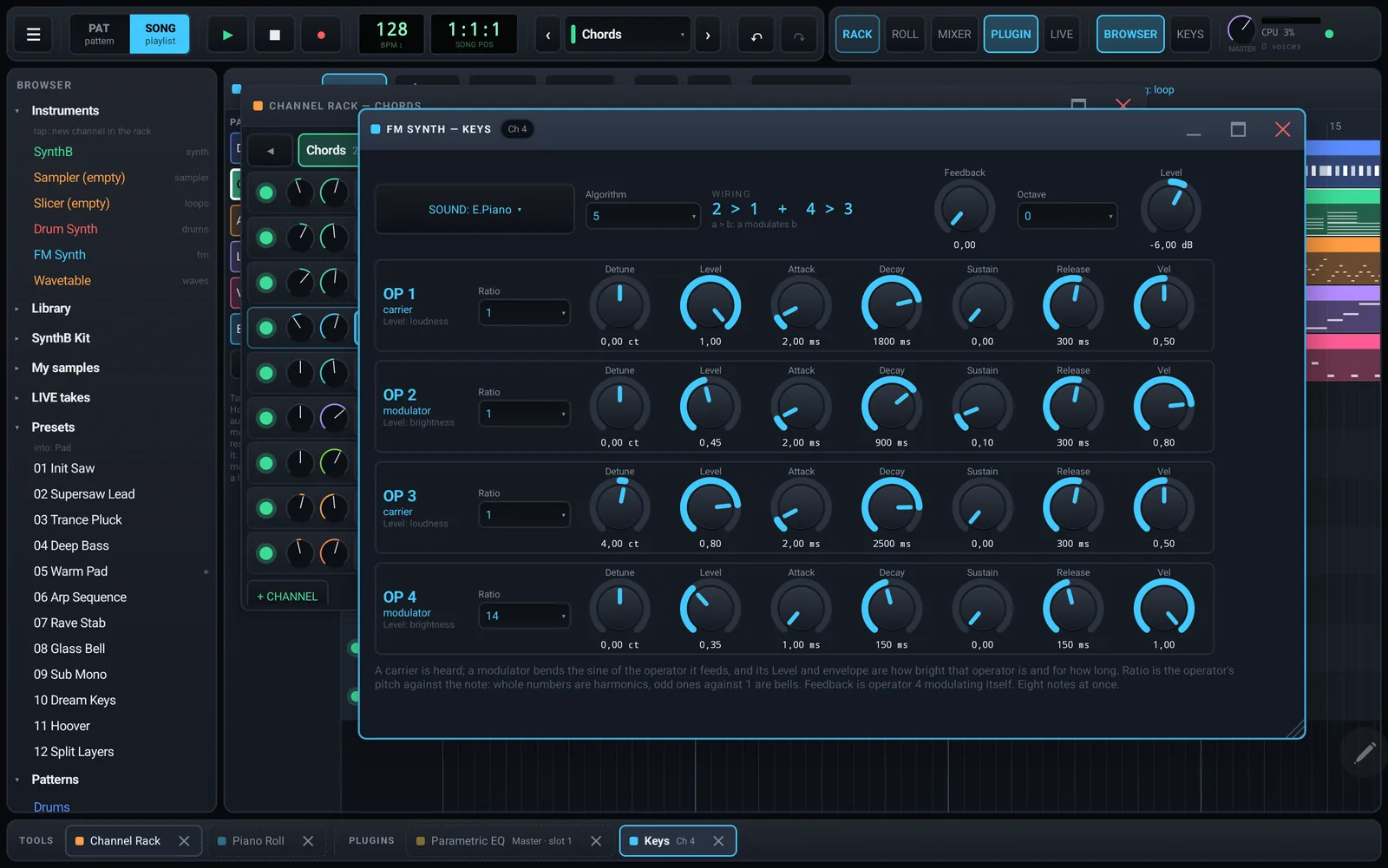
FM synth
Four operators and eight algorithms. FM is how you get glassy electric pianos, bells, plucks and hard, punchy basses. SynthB includes starting sounds so you do not have to learn FM from scratch.
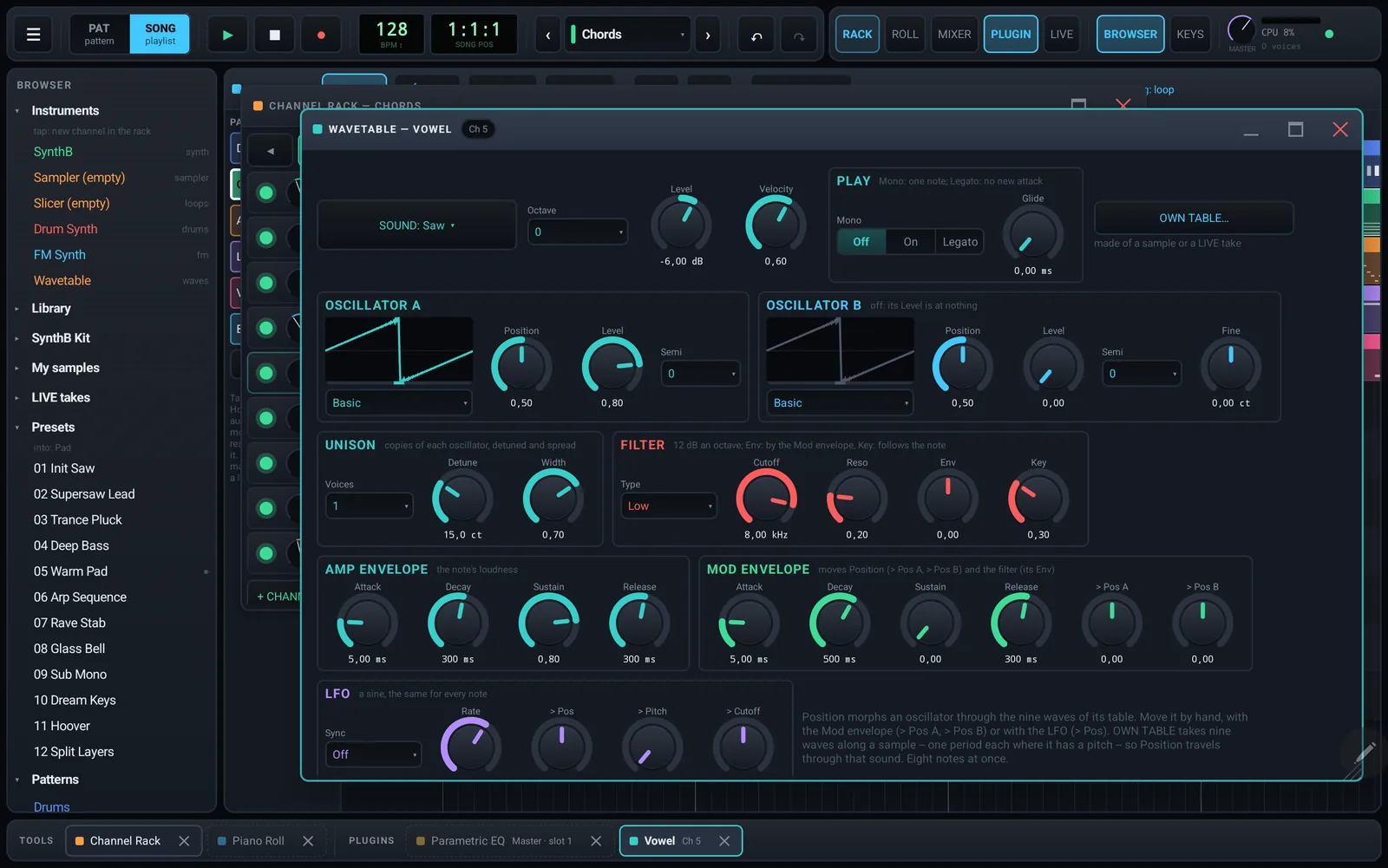
Wavetable synth
Two oscillators sweep through tables of waves, with unison, a filter and glide. Six built-in tables come with it. It can also build a wavetable from your own sample: record your voice, a guitar or a kettle, and sweep through it as a wave.
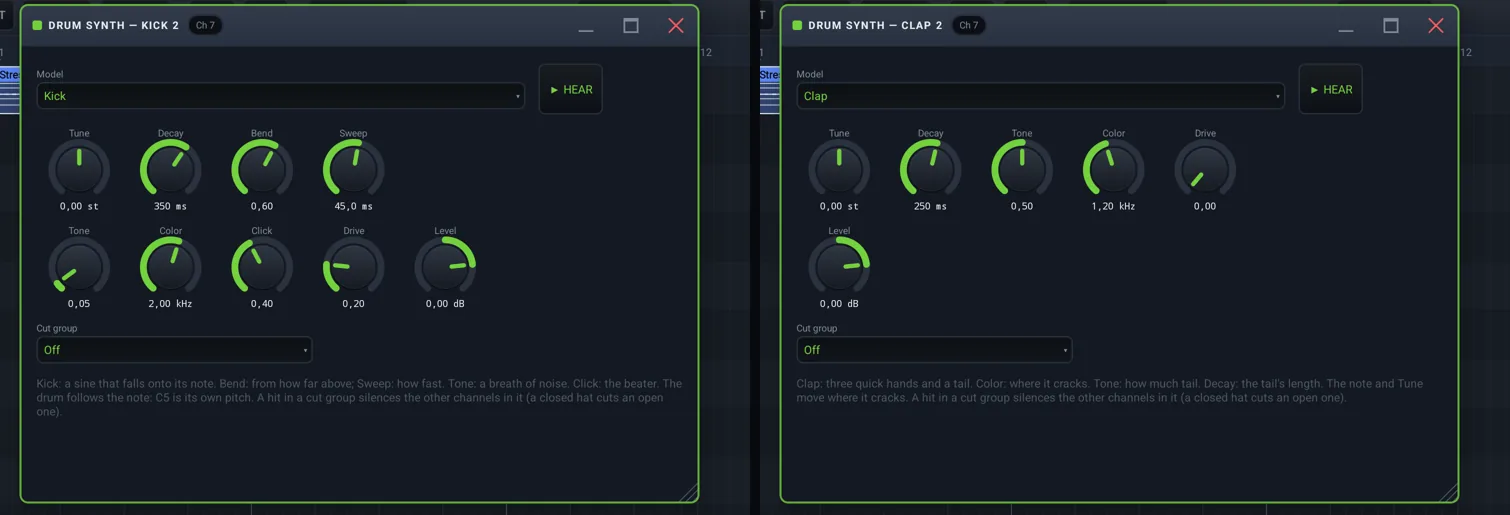
Drum synth
Kick, snare, hat, clap, tom and cowbell are all synthesised, not sampled, with the knobs a drum machine has. You can tune an 808-style kick to the key of the song, or make a snare that no sample pack has.
Want to play something you recorded instead? The sampler and slicer handle that, and our guide to turning any sound into an instrument walks you through it.
Presets to start from, knobs to make it yours
Factory patches for every engine, and your own presets saved alongside them.